

Why Florida Properties Face a Different Moisture Risk
Florida’s subtropical humidity creates a property damage environment unlike anything found in drier climates. Relative humidity regularly sits at 75-90% outdoors, and interior spaces without active dehumidification hover between 60-70% on mild days. This baseline humidity means that water intrusion events, even minor ones, occur inside an environment already primed for mold colonization. A small roof leak or appliance overflow that would dry within days in an arid climate instead persists in Florida homes for weeks, feeding mold growth before the moisture source is even identified. The 80-90 degree temperatures common throughout most of the year accelerate fungal reproduction rates dramatically. Mold doubles in colony size every 3-6 hours at 80 degrees Fahrenheit with adequate moisture. This combination of ambient humidity, warm temperature, and routine water events creates Florida properties that are essentially permanent mold incubation environments waiting for a trigger event. Understanding this risk requires recognizing that speed of response, not scope of water damage, determines whether an intrusion becomes a minor cleanup or a full remediation event.
The 24 to 48 Hour Window When Mold Becomes Inevitable
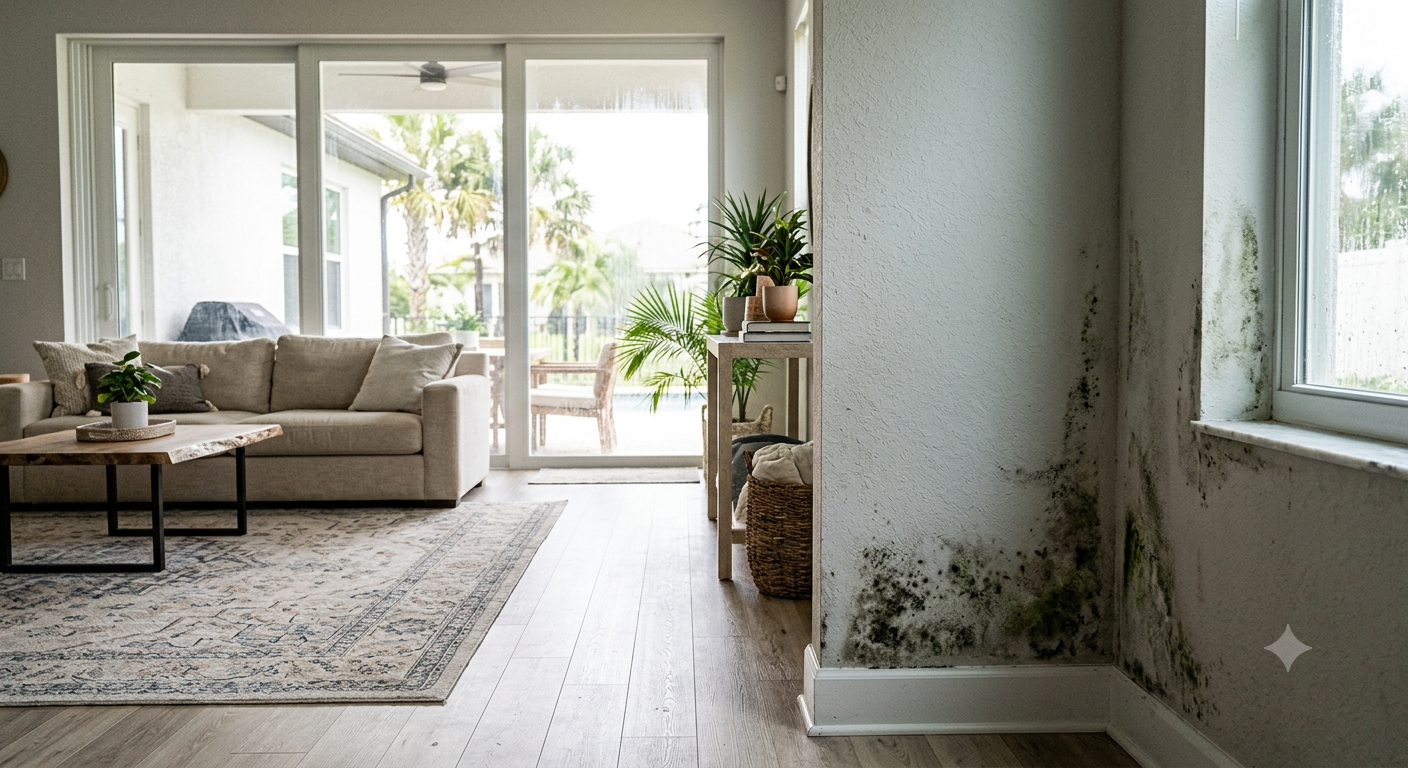
After water intrusion in a Florida home, mold initiation occurs within 24-48 hours rather than the 72 hours often cited in colder climates. Florida’s ambient humidity means the air inside wall cavities, beneath flooring, and within HVAC systems already carries sufficient moisture to support mold at baseline. Added water from flooding or leaks doesn’t need to reach critical mass on its own because it merges with existing ambient moisture to create a persistently saturated environment. Mold spores germinate within 12-24 hours of reaching adequate moisture on organic substrates, including drywall paper, wood framing, carpet backing, and insulation. Visible mold colonies appear within 3-5 days in Florida summer conditions. By day 7, mold has penetrated porous materials to depths that surface cleaning cannot address. By day 14, mold colonies are producing spores that circulate through HVAC systems into every connected room. The critical window for effective intervention is the first 24-48 hours, before colonization makes remediation significantly more complex and expensive. Every additional day of delay expands the scope of remediation required.
Hidden Moisture Reservoirs in Florida Home Construction
Florida residential construction features several structural elements that trap moisture exceptionally well, extending the window of mold risk far beyond visible water intrusion. Stucco exterior walls, common throughout the Treasure Coast and South Florida, trap water behind the stucco layer when gaps appear around windows, penetrations, or cracks. Water enters these gaps during heavy rain and saturates the wood framing and sheathing behind the stucco while the exterior surface appears intact and dry. This hidden moisture persists for weeks in Florida’s humid conditions. Concrete block construction, another Florida staple, wicks moisture through block pores via capillary action, creating chronic interior humidity in wall cavities even when no liquid water is visible. Flat and low-slope roofs common on Florida homes pool water during heavy rain events, allowing slow penetration through seams and flashings that saturates insulation and ceiling assemblies. These construction characteristics mean Florida water damage assessment must go beyond visible wet surfaces to identify hidden moisture reservoirs that will continue feeding mold growth long after the initial event appears resolved.
Hurricane Season Water Intrusion and Cascading Mold Events
Florida’s hurricane season from June through November concentrates the highest risk water intrusion period into six consecutive months. Hurricane and tropical storm events introduce multiple simultaneous water intrusion vectors: wind-driven rain through window gaps and door seals, roof damage allowing ceiling penetration, flooding from storm surge or intense rainfall, and broken windows creating large-scale interior water exposure. Each intrusion vector saturates different building materials and cavities, creating distributed mold risk throughout the structure simultaneously. The particular challenge of hurricane-related water intrusion is that power outages disable HVAC systems and dehumidifiers at precisely the moment humidity control is most critical. Extended power outages lasting 3-5 days following major storms allow interior humidity to spike dramatically, accelerating mold colonization across all water-affected surfaces simultaneously. By the time power is restored and HVAC systems restart, mold colonies are already well-established throughout the affected areas. Professional restoration response immediately following hurricane events prevents this compounding scenario by deploying generator-powered dehumidification equipment that maintains humidity control regardless of power status.
Air Handler and Duct System Mold Amplification
Florida HVAC systems run nearly continuously year-round to manage the subtropical heat and humidity. This continuous operation means HVAC systems are the primary distribution network for mold spores following water intrusion events. When mold colonizes wall cavities or floor systems adjacent to HVAC return grilles, spores enter the air stream and deposit throughout the duct system. The interior of HVAC air handlers, including evaporator coils, drain pans, and blower wheels, are perpetually moist due to condensation from cooling operation. This moisture creates a perfect secondary mold colonization site that continuously reseeds mold spores into the air supply. Florida HVAC systems are particularly vulnerable because the extreme humidity differential between outdoor and conditioned indoor air means condensation volumes are high, drain pans accumulate standing water during high-demand periods, and duct leakage in unconditioned attics exposes ductwork to extreme temperatures and humidity that accelerate growth. Post-water-damage HVAC assessment is not optional in Florida. It’s essential because an unaddressed HVAC system becomes a mold amplification device that recontaminates remediated spaces.
Professional Restoration Timelines and Scope in Florida Climate Conditions
Professional water damage restoration in Florida operates on compressed timelines compared to national standards because of the accelerated mold risk. Water extraction must begin within hours, not days. Industrial dehumidification equipment must be deployed immediately after extraction to drive interior humidity below 50% before mold initiation accelerates. Structural drying with directed airflow systems continues for 3-5 days with daily moisture monitoring to confirm drying progress. If moisture remains in any structural component after 72 hours, that component typically requires removal and replacement rather than continued drying, because mold colonization has already initiated at levels that surface remediation cannot address. Comprehensive professional restoration includes post-drying mold testing to confirm biological contamination levels have returned to acceptable ranges before reconstruction begins. This testing step is critical in Florida because visible dryness does not indicate biological cleanliness in a high-humidity environment where mold spores remain viable on apparently dry surfaces. Skipping professional testing and beginning reconstruction over incompletely remediated substrates creates conditions for hidden mold recurrence within weeks of completion.
Frequently Asked Questions
| How quickly does mold grow after water damage in Florida? | In Florida’s warm, humid conditions, mold initiation begins within 24-48 hours of water intrusion, with visible colonies appearing within 3-5 days. This is significantly faster than the 72-hour timeline commonly cited for colder climates. Florida’s ambient humidity provides a baseline moisture level that accelerates colonization even before additional water is introduced. |
| Can Florida homeowners use fans and open windows to dry water damage? | In Florida, opening windows during humid summer months introduces additional moisture from outdoor air and accelerates mold growth rather than preventing it. Industrial dehumidification equipment is required to drive indoor humidity below 50%, which is not achievable with fans and natural ventilation in a subtropical climate. |
| Does homeowner’s insurance cover mold damage from water intrusion in Florida? | Florida homeowner’s insurance typically covers mold remediation when it results directly from a covered water event, such as a burst pipe or storm damage. However, mold resulting from long-term neglect or maintenance failures is often excluded. Quick professional documentation and restoration initiation is essential for insurance coverage. |
| How does Florida’s stucco construction affect water damage and mold risk? | Stucco exteriors can trap water behind the finish layer when cracks or gaps appear around penetrations, allowing hidden moisture saturation of wood framing and sheathing. This hidden moisture reservoir often goes undetected until interior mold symptoms appear, making professional moisture assessment of stucco walls essential after any significant rain event or water intrusion. |