

The Compounding Problem of Salt and Smoke Contamination
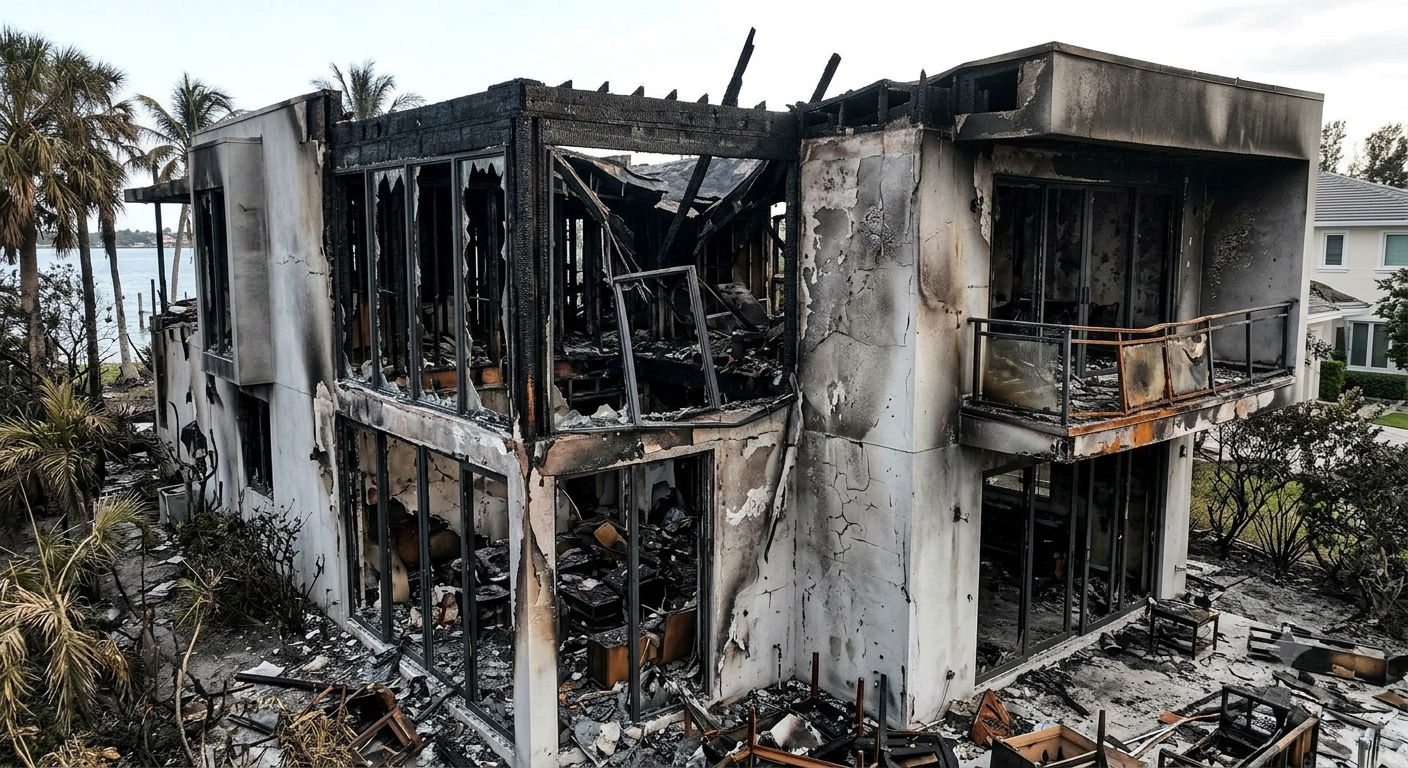
Fire damage restoration in coastal Florida properties faces a compounding challenge that inland restoration doesn’t encounter: salt air contamination interacting with fire and smoke residue to create accelerated corrosion and material degradation. Salt deposited on building surfaces, embedded in drywall and insulation, and coating metal components reacts chemically with acidic combustion byproducts from smoke to create highly corrosive chemical environments that aggressively attack structural and mechanical systems. Smoke itself produces acidic compounds including hydrochloric acid, sulfuric acid, and nitrogen oxides during combustion of common household materials. When these acids deposit on salt-loaded surfaces, they catalyze electrochemical corrosion reactions that proceed far faster than either salt or smoke contamination would produce independently. Properties within a mile of Florida’s coastline, including Treasure Coast communities, accumulate enough salt on exterior and interior surfaces to make this compounding effect significant in every fire restoration project.
Accelerated Metal Corrosion in Salt Smoke Environments
Structural metal components including fasteners, hurricane straps, roof deck clips, and rebar in concrete block experience dramatically accelerated corrosion when salt and smoke contamination combine. Standard galvanized fasteners that might last decades in inland conditions can show significant rust within weeks in coastal post-fire environments. This corrosion compromises structural connections that are particularly critical in Florida’s hurricane-prone environment. Electrical systems are especially vulnerable. Salt-contaminated copper wiring exposed to smoke acids develops surface oxidation that increases resistance and creates hot spots during operation. This creates fire re-ignition risk from electrical systems that appear undamaged but carry internal corrosion compromising their current-carrying capacity. HVAC systems face compounded corrosion risk because aluminum evaporator coils and copper refrigerant lines exposed to salt-smoke contamination can develop pinhole leaks within months. Refrigerant loss occurs gradually, HVAC efficiency declines, and occupants may not discover the damage until the system fails completely during the hottest part of a Florida summer.
Smoke Penetration Through Florida Concrete Block Construction
Concrete block construction, the dominant structural system in Florida residential building, presents a unique smoke penetration challenge during fire damage restoration. Concrete block is porous, and smoke particles and odor-causing compounds penetrate into the block matrix during fire events, particularly when fire duration or intensity is significant. Standard smoke cleaning protocols designed for drywall construction don’t address smoke embedded in concrete block. The block must be treated with specialized sealers and encapsulants that bond with the block surface to prevent continued off-gassing of smoke compounds. Without proper block treatment, homes with concrete block construction continue to off-gas smoke odors into living spaces for months or years following restoration, particularly on warm days when thermal expansion increases the off-gassing rate. This problem is compounded by salt already present in coastal concrete block, which can react with smoke compounds to produce additional odor-generating chemical byproducts. Professional fire restoration in Florida concrete block structures requires assessment of smoke penetration depth, specialized cleaning protocols appropriate for the substrate, and post-treatment testing to confirm odor elimination before reconstruction.
Hurricane Impact Window and Door Failure During Fires
Florida residential construction since the mid-2000s increasingly features hurricane impact windows and doors designed to resist debris penetration during storm events. These products perform excellently in their intended application but create a specific fire damage restoration consideration. Impact glass units use laminated glass with a polymer interlayer that maintains window integrity even when the glass breaks. During fires, heat causes this polymer interlayer to outgas, releasing chemical compounds that deposit on interior surfaces throughout the home. These deposits have a distinctive chemical odor that differs from standard smoke contamination and requires different cleaning approaches. Additionally, impact window frames are commonly aluminum with thermal break insulation that can absorb smoke compounds and continue releasing them over time. Insurance documentation for impact window replacement following fire damage must account for the full replacement cost of impact-rated units rather than standard window pricing, a distinction that affects restoration cost estimates significantly. Professional fire restoration teams familiar with Florida construction standards ensure proper material specifications in insurance documentation.
Coastal Humidity’s Effect on Post-Fire Material Drying
Fire suppression efforts introduce large volumes of water into already fire-damaged structures, and Florida’s coastal humidity creates an extremely challenging post-fire drying environment. Structures that have lost roof sections or window assemblies during fire events are exposed to outdoor humidity at Florida’s ambient levels. Drying water-saturated fire-damaged materials in an open structure in summer Florida conditions is orders of magnitude more challenging than in a closed, climate-controlled environment. Materials that firefighting water saturated remain wet indefinitely without aggressive mechanical drying because outdoor humidity prevents natural evaporation. Mold initiates in fire-damaged, water-saturated structures within 24-48 hours in Florida conditions, creating a dual contamination event: fire and smoke damage compounded by mold growth in water-damaged structural components. This dual contamination requires sequential remediation, fire and smoke cleanup first, followed by mold assessment and remediation, before reconstruction can begin. Attempting to skip the mold assessment step and begin reconstruction over water-damaged materials creates mold recurrence beneath new finishes within weeks.
Comprehensive Coastal Fire Restoration Planning
Effective fire damage restoration for coastal Florida properties requires assessment protocols that go beyond standard fire restoration practices to address the specific challenges of salt air, humidity, and Florida construction methods. This includes electrochemical corrosion assessment of all metal structural components, smoke penetration testing of concrete block and masonry surfaces, post-fire mold assessment of all water-damaged areas, HVAC system assessment for both smoke contamination and corrosion, documentation of hurricane-rated component replacement costs for insurance purposes, and interim weather protection to prevent additional water intrusion through fire-damaged roof and wall openings. The restoration timeline in coastal Florida is often longer than inland projects because sequential remediation of fire, smoke, water, and mold contamination must be completed in the correct order to prevent recontamination of restored areas. Attempting to compress timelines by overlapping remediation phases typically results in rework when mold grows beneath new finishes or when inadequately treated smoke contamination produces ongoing odors in completed spaces.
Frequently Asked Questions
| Why does fire damage restoration take longer in coastal Florida than in other regions? | Coastal Florida fire restoration involves compounding contamination from salt air reacting with smoke residue, post-fire water damage in a high-humidity environment that accelerates mold growth, and Florida construction methods including concrete block and impact windows that require specialized treatment approaches. Sequential remediation of fire, smoke, water, and mold must be completed in correct order, extending timelines compared to single-event inland restoration. |
| Does fire damage affect hurricane impact windows? | Yes. Heat causes impact window polymer interlayers to off-gas chemical compounds that deposit on interior surfaces. Impact frames can absorb smoke compounds. Both issues affect indoor air quality and odor even after visible smoke cleanup is complete. Impact windows and doors damaged or compromised during a fire require full replacement with impact-rated units, which are significantly more expensive than standard windows. |
| How does salt air affect smoke odor after a coastal Florida fire? | Salt deposited on building surfaces reacts with acidic smoke compounds to produce additional corrosive and odor-generating byproducts. This chemical interaction means smoke odor in coastal properties can be more persistent and more damaging than in inland properties. Specialized cleaning protocols that address both smoke residue and salt contamination are required for complete odor elimination. |
| What mold risk exists after firefighting water is used on a Florida home? | Firefighting water saturates structural materials that then remain in Florida’s ambient humidity without active drying. Mold initiates within 24-48 hours on wet fire-damaged materials in Florida summer conditions. Professional deployment of dehumidification equipment immediately after fire suppression is essential to prevent dual fire and mold contamination events that significantly increase restoration scope and cost. |