


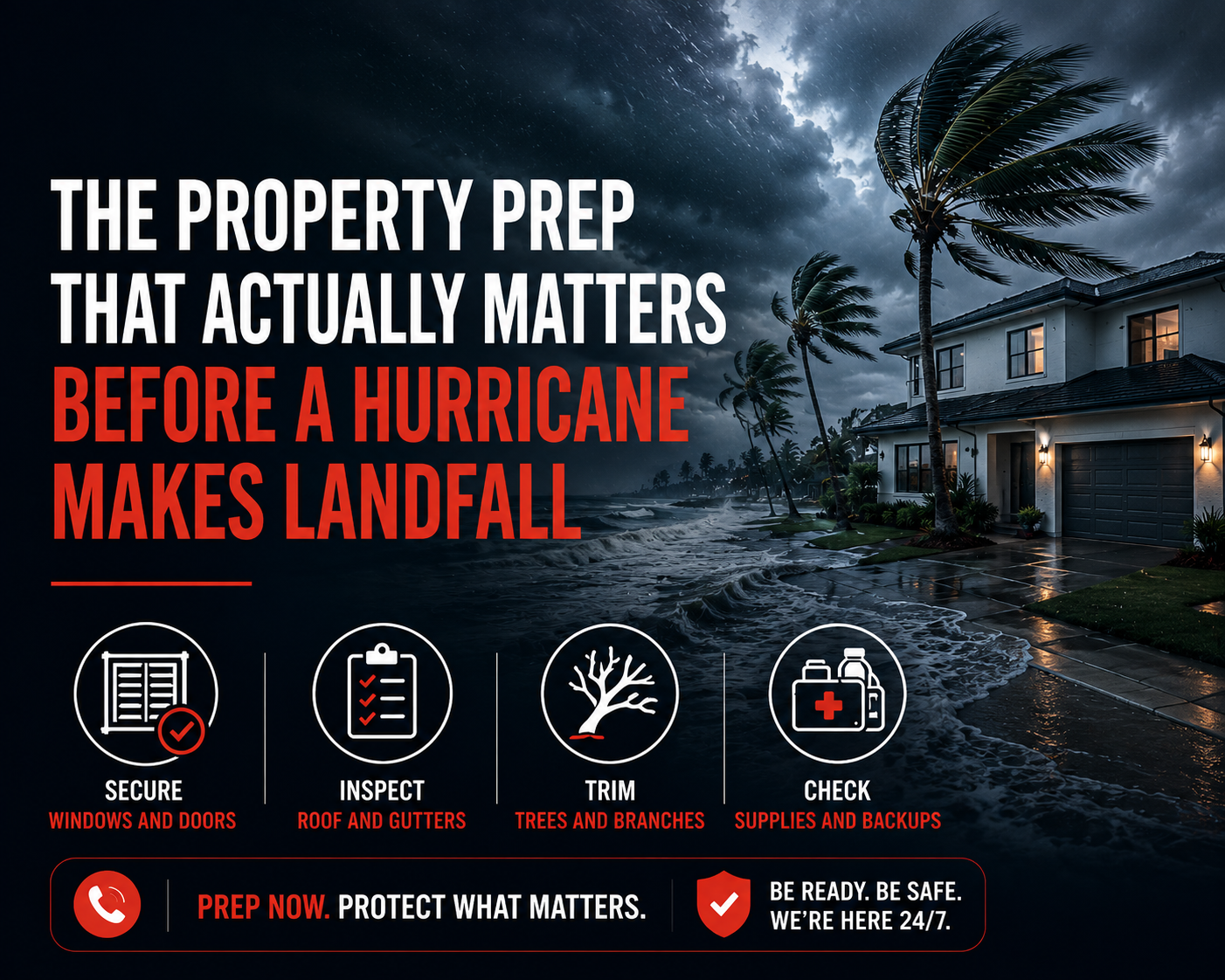
By the time a hurricane watch is posted for the Florida coast, the preparation window is measured in hours, and most of what circulates as hurricane advice is either too late to execute or too trivial to matter. The preparation that changes outcomes divides cleanly into two lists: what you do in season, before any storm has a name, and what you do in the final seventy-two hours. Property owners who work both lists recover faster, claim more successfully, and hand the restoration crew a fundamentally easier job than those who start taping windows on watch day.
In-Season Preparation: The List That Does the Work
- Photograph and video every room, the exterior from all sides, and the roof from the ground: this pre-storm record is the baseline every insurance claim is measured against
- Confirm your coverage stack now: wind coverage and its hurricane deductible, flood insurance which is always separate and carries a thirty-day waiting period, and contents coverage limits
- Service the roof: loose shingles, lifted flashing, and clogged gutters are the entry points wind-driven rain exploits first
- Trim trees away from the structure and remove dead limbs, the most common source of roof punctures in moderate winds
- Test generator, charge battery banks, and locate water and gas shutoffs while nothing is urgent
The Final 72 Hours
When a storm has your coast in the cone: deploy shutters or panels, move vehicles out of flood-prone parking, elevate ground-floor contents where storm surge or street flooding is plausible, freeze water bottles to hold refrigeration through outages, and photograph the property again in its prepared state. Document the preparation itself, carriers respond differently to owners who can show mitigation effort, and Florida policies require reasonable steps to protect the property.
The Shutoff Decision
If evacuation is ordered or chosen, shut off the water main before leaving. A supply line that fails during the storm, or in the days of power instability after it, otherwise runs unattended into an empty house. Gas shutoff follows utility guidance rather than default; electrical main shutoff is warranted where flooding of the panel or outlets is plausible. These three decisions, made calmly in advance, prevent a large share of the secondary losses that follow hurricanes.
What to Stage for the Aftermath
The recovery starts the hour the storm passes, and what you staged determines what you can do in that hour. Tarps, plastic sheeting, and a staple gun handle small breaches before rain bands return. The pre-storm photo set plus a charged phone documents damage immediately. And the most valuable single item on the list is a relationship: property owners who identify their restoration company before the season, and know the emergency line, get response while first-call clients are still leaving voicemails. CPR provides pre-season walkthroughs and priority response arrangements for Florida property owners through its hurricane damage program, precisely because post-landfall capacity is claimed in advance.
Commercial Properties: Add the Continuity Layer
Businesses layer continuity planning onto the same physical prep: data and records protected, inventory elevated or relocated, tenant communication drafted in advance, and the restoration vendor relationship documented with after-hours contacts. CPR’s commercial pre-loss arrangements cover exactly this layer, so the first post-storm conversation is about deployment rather than introductions.
Frequently Asked Questions
Q: What is the most important hurricane prep for a Florida home?
A: Documentation and coverage verification, done in season. The pre-storm photo and video record is the baseline every claim is measured against, and confirming wind, flood, and contents coverage while changes are still possible prevents the most expensive discovery in Florida property ownership: learning after landfall that surge damage needed a flood policy that was never purchased. Physical prep matters, but it cannot fix a coverage gap.
Q: When is it too late to buy flood insurance before a hurricane?
A: Effectively a month out: NFIP flood policies carry a thirty-day waiting period before coverage begins, and private flood policies typically impose waiting periods or bind restrictions once a named storm threatens. Flood coverage is a pre-season decision. Standard homeowner and wind policies do not cover rising water from surge or rainfall flooding.
Q: Should I shut off utilities before evacuating for a hurricane?
A: Shut off the water main in nearly all cases: unattended supply failures during and after the storm are a major secondary loss source. Shut off electricity at the main if flooding could reach the panel or outlets. Follow utility and local guidance on gas rather than shutting it by default, since restoration requires utility relighting. Know all three shutoff locations before the season starts.
Q: Does insurance require me to prepare my property before a hurricane?
A: Florida policies require reasonable steps to protect the property, and carriers scrutinize losses where obvious preparation was skipped, unshuttered openings, unsecured outdoor items that became projectiles, known roof defects left unrepaired. Documenting your preparation, photos of shutters deployed, receipts for pre-season roof work, strengthens the claim and removes the neglect argument before it is made.
Get ready before the cone shows up. CPR provides pre-season walkthroughs and priority storm response across Stuart, Tampa, and the Florida coast. Call now.