


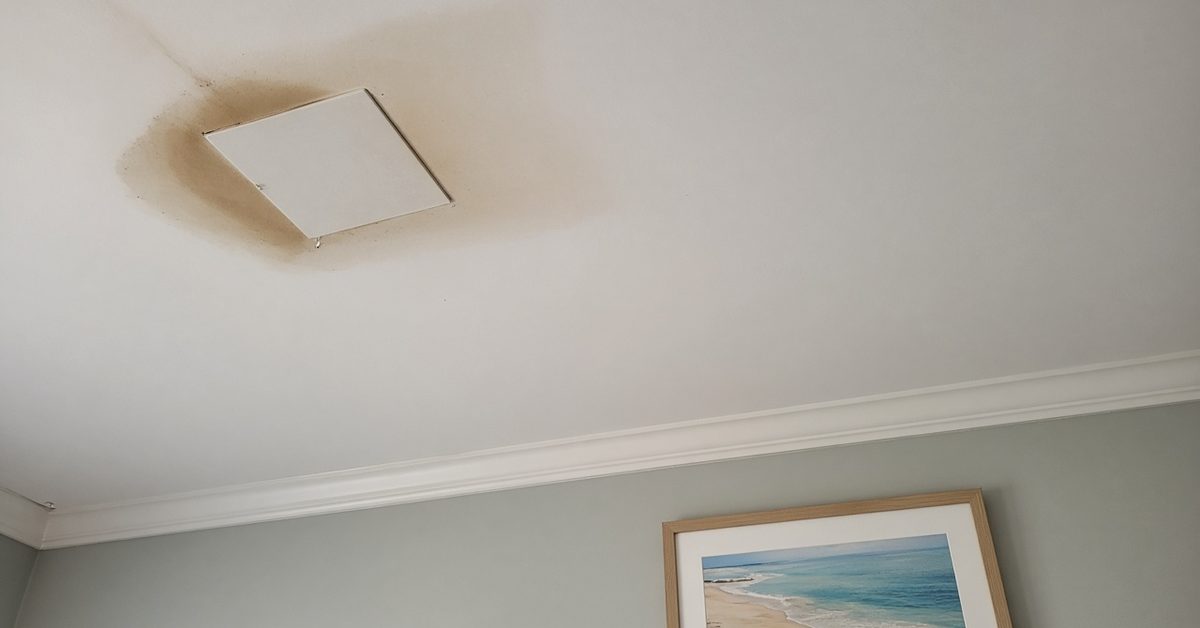
In Florida, the air conditioner runs almost all year, and it does more than cool the house. It pulls a surprising amount of water out of the air. On a humid summer day, a typical home system can remove several gallons of water. All of that has to drain somewhere, and it relies on a small plastic pipe that most homeowners never think about.
When that drain line clogs, the water backs up and overflows. It is one of the most common water damage calls we get on the Treasure Coast. Here is why it happens, how to spot it early, and what to do when it leaks.
How the System Handles Water
As warm, humid air passes over the cold coil inside your air handler, moisture condenses and drips into a pan. From the pan, a PVC condensate line carries the water outside or into a drain. Many systems also have a secondary pan under the air handler as a backup, and some have a float switch that shuts the system off if water rises too high.
In Florida homes, the air handler often sits in a hall closet, a garage, or the attic. Each location affects where water goes when things go wrong.
Why Condensate Lines Clog
The line stays warm, dark, and wet all the time, which makes it an ideal place for algae and sludge to build up. Dust pulled through the system adds to it. Over months, the buildup narrows the pipe until water backs up into the pan.
Other causes include a line that was installed without enough slope, a cracked pan, a float switch that was never installed or has failed, and insects or debris blocking the outside end of the line.
Warning Signs
- Water around the base of the air handler closet or in the garage near the unit
- A stain or bubble on the ceiling below an attic air handler
- Swollen or discolored baseboards near the hall closet
- The AC shutting off unexpectedly, which can mean a float switch tripped
- Water dripping from the secondary drain outlet, often over a window or soffit
That last one matters. If water is coming out of the secondary line, the primary line is already clogged.
Where the Water Goes
A hall closet air handler usually leaks onto the floor and spreads under the closet wall into the hallway and nearby bedrooms. Water wicks up drywall and soaks baseboards, carpet pad, and the edges of laminate or wood flooring.
An attic unit is worse. Water overflows the pan, soaks insulation, and collects on the ceiling drywall below. Slow leaks can go unnoticed for weeks, weakening the ceiling until it sags. On a slab home, a garage unit often leaks into the garage and along the wall shared with the house.
What to Do Right Away
- Turn the AC off at the thermostat to stop producing more water.
- Mop or vacuum standing water around the unit.
- Check the ceiling below attic units for bulging and keep people out from under it.
- Take photos of the unit, the pan, and any damage.
- Call an HVAC technician to clear the line and a restoration company for the water damage.
What Restoration Involves
Because condensate leaks are often slow, the water has usually spread farther than it looks. Professional water damage restoration starts with moisture meters and thermal imaging to find every wet wall, ceiling, and floor. Wet baseboards come off, drywall may be cut at the bottom so wall cavities can dry, and wet carpet pad is removed. In attic cases, saturated insulation and sagging ceiling drywall have to go.
Once the structure is dry, the damaged areas get rebuilt. Our building restoration team handles drywall, texture, paint, trim, and flooring so the repair blends with the rest of the house.
Keeping the Line Clear
Most condensate problems are preventable. Have the line cleared during routine AC maintenance, usually twice a year in Florida. Pour a cup of distilled vinegar into the access port every month or two to slow buildup. Make sure a float switch is installed and working. And if water ever comes out of the secondary drain, treat it as a warning, not a nuisance.
Frequently Asked Questions
How often should my AC drain line be cleaned in Florida?
Most HVAC technicians recommend clearing it at every maintenance visit, which in Florida usually means twice a year. Because the system runs nearly year-round here, algae and sludge build up faster than in cooler states. A monthly cup of distilled vinegar in the access port helps between visits.
What does a float switch do?
A float switch sits in the drain pan or on the drain line. If water rises because the line is clogged, the switch shuts the AC off before the pan overflows. It’s an inexpensive part, and it prevents a lot of water damage. If your AC ever shuts off on its own, check the drain before assuming the unit is broken.
Is AC leak water damage covered by insurance?
Sudden overflows are often covered, but long-term leaks can be treated as a maintenance issue. Insurers may ask about the age of the system and when the line was last serviced. Keeping maintenance records and reporting the damage quickly both help.
Can I keep running the AC while the house dries?
Once the drain line is cleared and the unit is working properly, yes. In fact, running the AC helps control indoor humidity during drying. Our team will let you know the best setting while the drying equipment is in place.
Local Help on the Treasure Coast
We respond to AC-related water damage across the region, including Port St. Lucie and Vero Beach. If your air handler is leaking, call Coastal Property Restoration at 877-853-5663. We’re available 24/7.