


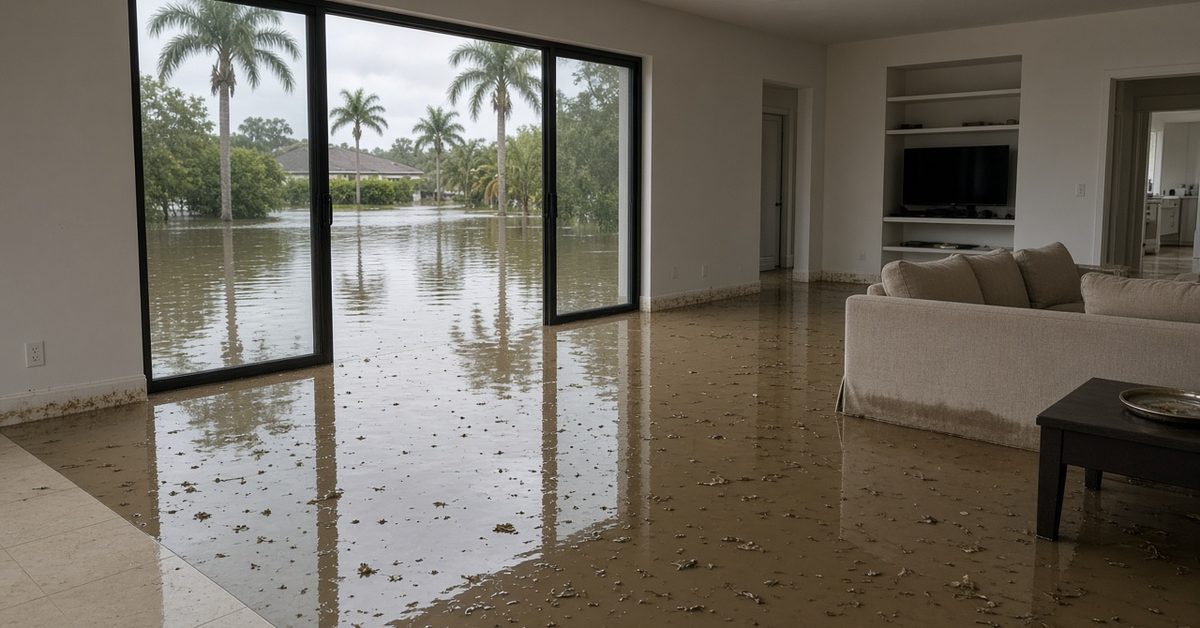
To a homeowner, water on the floor is water on the floor. To an insurance company in Florida, where that water came from can decide whether a claim gets paid, which policy pays it, and how much. We see the confusion after every major storm, and it causes a lot of stress for families who are already dealing with a wet house.
Here is a plain-language look at the difference between flood damage and water damage, why it matters, and what to do after either one.
What Counts as Flood
In insurance terms, a flood generally means water that rises from outside and covers normally dry land before it enters your home. Storm surge, overflowing canals and rivers, heavy rain that pools and pushes in under doors, and water rising from the ground all typically fall into this category.
Standard homeowners policies usually exclude flood. Flood coverage comes from a separate policy, either through the National Flood Insurance Program or a private flood insurer. Many Florida homeowners outside high-risk zones don’t carry it, and some don’t realize they don’t have it until after a storm.
What Counts as Water Damage
Water damage, in the homeowners policy sense, usually means sudden and accidental water from inside the home or from above. A burst pipe, a failed water heater, an overflowing washing machine, or rain that enters through a roof opening created by wind are common examples.
These losses are typically handled under your homeowners policy, subject to your deductible, which in Florida may include a separate hurricane deductible for storm-related claims. Slow leaks that happen over weeks or months are often excluded as maintenance issues.
Why the Source Matters During a Hurricane
After a hurricane, it is common for a home to have both kinds of water. Wind tears off shingles and rain pours through the roof. Meanwhile, storm surge or street flooding pushes water in through the doors. The two sources often end up on different claims with different adjusters.
That is why documentation matters so much. Photos of the waterline on walls, the roof damage, and ceiling stains help show which water came from where. A restoration company that understands this can map moisture and describe the damage in a way that supports both claims.
Flood Water Is Handled Differently
Rising flood water is not clean. It carries sewage, soil, fuel, chemicals, and debris from the streets and canals. Restoration standards treat it as contaminated water, which means porous materials it touched, like drywall, insulation, carpet, and pad, generally have to be removed rather than dried in place. Cleaning and disinfection follow before drying and rebuilding.
Water from a burst supply pipe, if handled quickly, is usually clean at first, so more materials can often be dried and saved. That difference changes the scope, the cost, and the timeline.
What to Do After Either Kind of Loss
- Stay safe. Don’t walk through standing water near outlets, and keep power off in flooded areas.
- Photograph and video everything, including waterlines, before anything is moved.
- Stop more water from entering if you can do so safely, like tarping a roof opening.
- Report the claim to every insurer that might be involved, including flood if you carry it.
- Call a restoration company quickly. Florida heat and humidity make fast drying essential.
How We Help
Our team handles both sides of storm losses, from hurricane damage cleanup and restoration to interior leaks from pipes and appliances. Every job starts with an inspection and moisture map, and professional water damage restoration follows the right protocol for the type of water involved. We document the damage carefully so your adjusters have what they need.
A Quick Word on Coverage
We are not insurance agents, and every policy reads differently. The best step you can take today, before the next storm, is to pull out your policy and confirm whether you have flood coverage, what your hurricane deductible is, and whether water backup is included.
Frequently Asked Questions
Does homeowners insurance in Florida cover flooding?
Standard homeowners policies usually exclude flood, meaning water that rises from outside, like storm surge or street flooding. Flood coverage comes from a separate policy through the National Flood Insurance Program or a private insurer. Many policies have a waiting period before coverage starts, so it’s best to buy it well before hurricane season.
What is a hurricane deductible?
Many Florida policies have a separate deductible for damage caused by a named storm. It’s often a percentage of your dwelling coverage rather than a flat dollar amount, so it can be much higher than your regular deductible. Check your declarations page so the number doesn’t surprise you after a storm.
Can my house have both a flood claim and a wind claim?
Yes, and it happens often after hurricanes. Rain through a wind-damaged roof may fall under homeowners coverage, while rising water may fall under flood coverage. Good photos, waterline documentation, and a detailed moisture report help each adjuster see which damage belongs to which claim.
Why does flood water require more demolition?
Flood water carries sewage, soil, and chemicals, so porous materials it soaked, like drywall, insulation, and carpet, usually can’t be safely cleaned. They’re removed, and the structure is cleaned and disinfected before drying. Clean water from a pipe often allows more materials to be dried in place.
Serving South Florida
We help homeowners and property managers after storms and leaks, from West Palm Beach and Palm Beach Gardens to Port St. Lucie. Call Coastal Property Restoration at 877-853-5663, any hour, any day.