

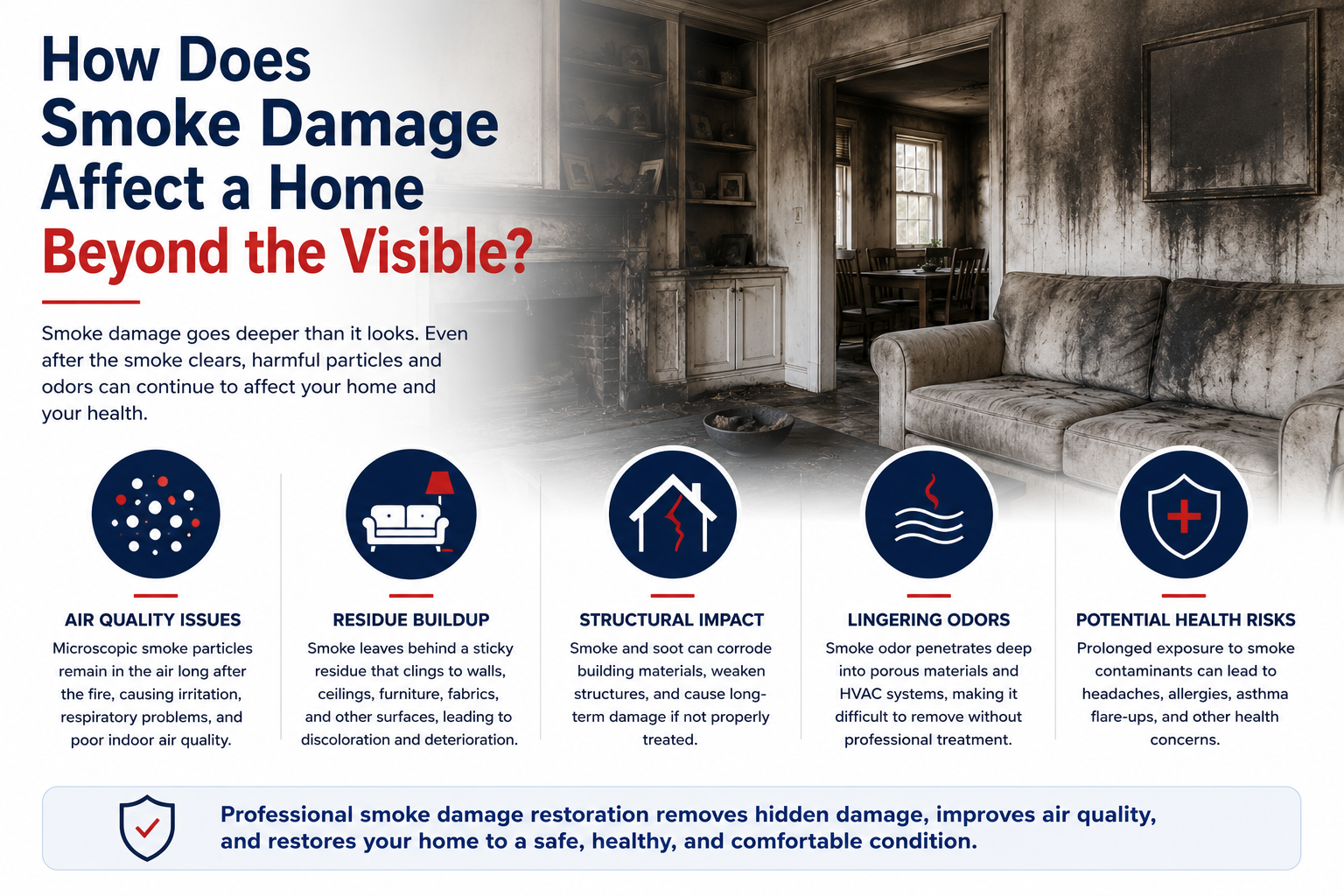
Smoke damage affects a home by depositing acidic soot on every surface the smoke reached, absorbing odor compounds into porous materials throughout the structure, contaminating the HVAC system and distributing that contamination to every connected room, and degrading indoor air quality through the continuous off-gassing of volatile organic compounds from affected surfaces and materials. The visible soot on walls and ceilings is the most obvious effect. The least visible effects are often the most persistent.
Understanding what smoke actually does to a structure changes the conversation about what complete smoke damage remediation requires.
What Soot Does to Surfaces Over Time
Soot is not just discoloration. It is an acidic residue that actively degrades the materials it contacts. Within days of deposition, soot begins corroding metal surfaces, etching glass, and permanently staining porous materials that are not cleaned using the correct method. The longer it sits, the more damage it does and the harder it becomes to remove without replacing the surface.
The correct cleaning sequence is dry chemical sponge cleaning and HEPA vacuuming before any wet method is applied. Soot dry-cleaned first is liftable from most surfaces. Soot wet-wiped first is pushed deeper into the material and sets staining that cannot be reversed. This sequence is specified in the IICRC S700 standard and is not discretionary.
CPR’s certified smoke damage cleanup follows this sequence on every affected surface throughout the full extent of smoke travel, not just in the rooms nearest the fire. The scope is determined by smoke travel mapping, not by where the fire originated.
How Smoke Travels Through a Structure
Smoke follows air pressure differentials through every gap in the structure. It moves through wall cavities via electrical outlet boxes and plumbing penetrations. It gets pulled into HVAC returns and distributed to every connected room. It rises through ceiling penetrations into the attic. It works under door frames and through gaps at window headers.
A fire in one room of a home does not produce smoke damage limited to that room. The smoke damage footprint in a typical residence extends throughout the home. Rooms with closed doors have less deposition but are not unaffected. Rooms connected to the HVAC system are all smoke damage areas regardless of proximity to the fire.
Why HVAC Contamination Is the Recurring Odor Source
When the HVAC system ran during or after the fire, it pulled smoke-laden air through the return, deposited residue on the evaporator coil and air handler interior, and distributed that residue throughout the ductwork. Every subsequent cycle picks up those deposits and distributes them to every connected room.
Surface cleaning that does not include HVAC system cleaning produces a home that smells acceptable on the day the work is finished and begins smelling worse again within weeks as the system cycles and redistributes the duct contamination. This is the most common complaint after fire and smoke restoration that appeared complete.
CPR includes HVAC cleaning as a required component of fire damage and smoke damage restoration scopes, not as an optional add-on. The documentation submitted to the insurance adjuster includes the HVAC cleaning scope specifically to ensure it is covered as part of the fire loss rather than disputed as a separate maintenance item.
What Florida Humidity Does to Smoke Damaged Homes
Florida’s high ambient humidity creates an accelerated timeline for secondary damage in smoke-affected homes. Humidity reactivates soot deposits that have dried, making them harder to remove. Humidity combined with the organic contamination in smoke residue creates conditions favorable to mold growth on surfaces that are not technically wet but have enough moisture from the ambient environment to support microbial activity.
Smoke damaged homes in coastal Florida that are not remediated quickly face a compound problem: soot corrosion advancing while humidity creates secondary microbial growth on smoke-affected surfaces. The remediation scope that addresses both issues simultaneously is more efficient than addressing them sequentially.
CPR’s hurricane damage and smoke damage restoration experience in the Florida coastal environment means the remediation approach accounts for local humidity conditions rather than applying a protocol developed for drier climates.
Embedded Odor and What Eliminates It
Smoke odor compounds absorb into drywall, insulation, wood framing, and soft contents during a fire event and continue off-gassing after surface cleaning is complete. Thermal fogging vaporizes deodorizing agents into particles that reach the same spaces the smoke reached. Hydroxyl generation produces reactive molecules that break down odor compounds throughout the treated space over time. Both methods address embedded compounds rather than masking surface odor.
Surface deodorizers, ozone treatments applied without proper protocols, and paint-over approaches mask the odor temporarily. The embedded compounds are still in the material and continue releasing. The odor that returns weeks after an apparent cleanup is the same odor that was temporarily masked, not a new problem.
For Florida properties dealing with storm damage that included lightning strikes and secondary fire or smoke events, CPR handles the full combined scope. Storm damage, water intrusion, and smoke damage addressed by one team with a single insurance documentation package.
Frequently Asked Questions
Q: How does smoke damage affect a home beyond what you can see?
A: Smoke deposits acidic soot that corrodes metals, etches glass, and permanently stains porous materials if not cleaned correctly. It absorbs odor compounds into drywall, insulation, and framing that off-gas continuously after surface cleaning. It contaminates the HVAC system which distributes that contamination to every connected room each time it cycles. And it degrades indoor air quality through volatile organic compound off-gassing that persists until materials are professionally treated.
Q: How do you get smoke smell out of a house permanently?
A: Permanent smoke odor elimination requires soot removal using the dry-before-wet sequence across the full smoke travel footprint, HVAC system cleaning including ductwork and air handler, and treatment of embedded odor compounds using thermal fogging or hydroxyl generation. These are not sequential options. All three are required for complete odor elimination. Surface cleaning alone or masking with deodorizers produces temporary results that fail when temperature or humidity conditions reactivate the embedded compounds.
Q: Does smoke damage get worse over time if untreated?
A: Yes. Soot is acidic and continues corroding and staining materials the longer it remains. In humid climates, moisture reactivates soot deposits and can promote microbial growth on smoke-affected surfaces. The longer smoke damage goes untreated, the more surfaces move from restorable to replacement, and the deeper odor compounds embed into structural materials. Early professional intervention consistently produces better outcomes than delayed treatment.
Q: Does insurance cover smoke damage without fire?
A: Yes. Smoke damage from an external fire source such as a neighboring structure fire or wildfire event is covered under most standard homeowner policies even when no fire directly affected the property. Documentation is essential for these claims because smoke damage without visible structural fire damage can be difficult to quantify without professional air quality assessment and a detailed remediation scope.
Smoke damage in your home? Coastal Property Restoration handles full smoke remediation including soot removal, HVAC cleaning, and embedded odor treatment. Call now.