

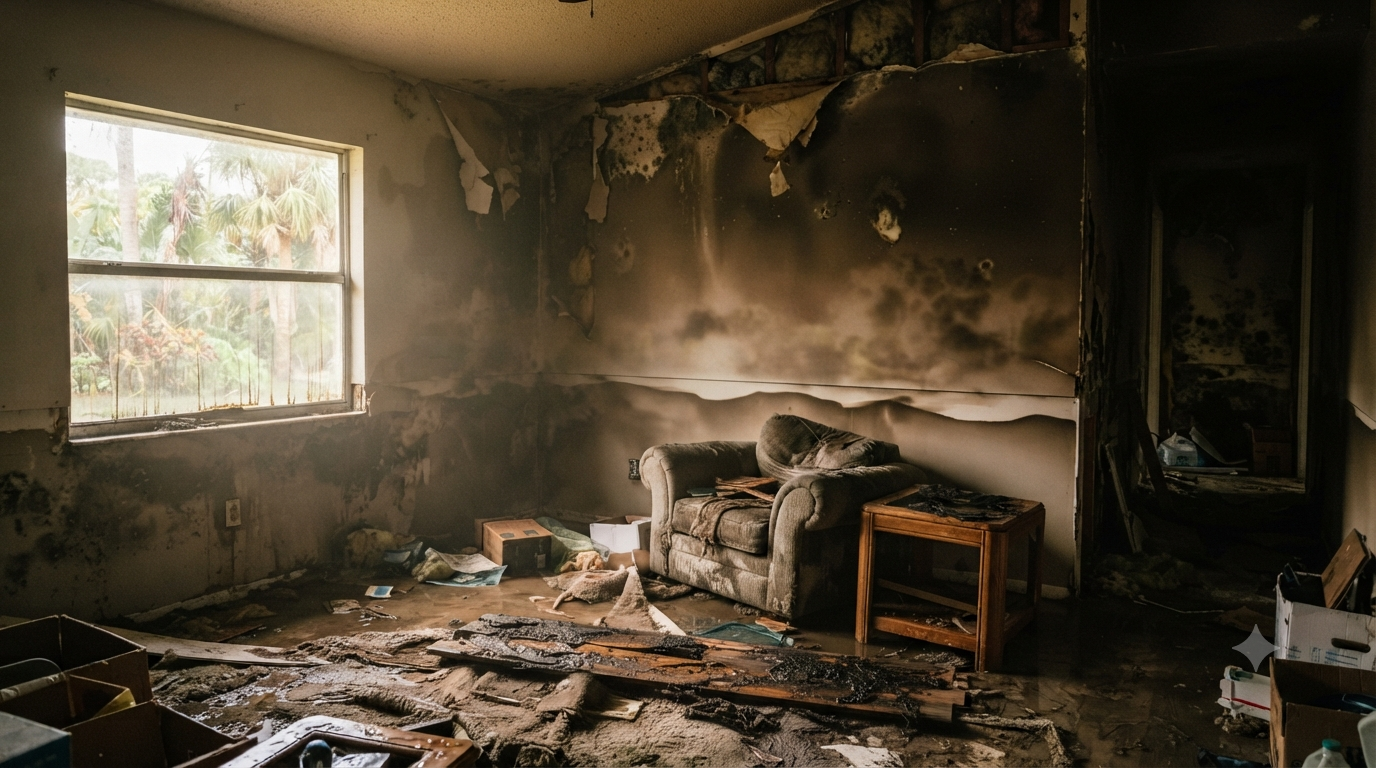
Smoke damage is not static. Unlike a water stain that stays where it is until cleaned, smoke residue actively degrades the surfaces and materials it contacts, and the damage compounds with every day that passes without professional intervention. Metals corrode. Glass etches. Porous materials absorb odor compounds progressively deeper. The restoration scope that would have been manageable at day two is significantly larger and more expensive at day ten. Understanding the progression gives property owners a clear picture of what is at stake when smoke damage response is delayed.
Days One and Two: The Critical Window
In the first 24 to 48 hours after a fire or smoke event, soot on metal surfaces has begun an acidic reaction that corrodes chrome fixtures, door hardware, appliances, and anything else with a metal component. This corrosion is reversible if the soot is removed within this window and is permanent if it is not. Smoke-damaged metals that are not cleaned within 48 hours often require replacement rather than cleaning.
Glass surfaces in the affected area begin etching during this window. The silica surface of glass reacts with the acidic compounds in smoke residue, creating a frosting or haze that is not removable by cleaning. Smoke damage to glass that is not addressed within 48 hours requires glass replacement rather than cleaning in significant exposures.
Days Three Through Seven: Porous Material Penetration
Beyond the first 48 hours, the focus shifts to porous materials. Drywall, wood framing, insulation, and soft furnishings continue absorbing smoke compounds deeper into the material with every passing day. Odor compounds that are near the surface on day two are deep in the material by day seven. The cleaning scope that would have addressed day-two contamination with dry chemical sponges now requires more aggressive treatment or material replacement to achieve the same result.
In Florida’s humid climate, this penetration is faster than in drier environments. The humidity opens the pores of building materials slightly, accelerating the absorption of smoke compounds. A Florida smoke damage event that would take a week to reach critical penetration depth in a dry climate may reach that point in four to five days.
What Humidity Does to Smoke Residue in Florida
Florida’s ambient humidity creates a secondary challenge for smoke damage. Dry soot on surfaces can be removed with dry chemical sponges. Soot that has absorbed moisture from the ambient air becomes tacky and more difficult to remove without smearing, which drives the contamination deeper into the surface. CPR’s smoke damage restoration teams understand this Florida-specific dynamic and deploy dehumidification alongside soot cleaning to control ambient moisture during the cleaning process, preventing the soot from activating before it can be dry-cleaned off the surface.
The HVAC Redistribution Cycle
Every time the HVAC system runs in a smoke-affected property, it picks up residue from contaminated duct surfaces and redistributes it throughout the home. The fire damage restoration scope that would have been manageable if the system was shut off immediately after the event expands significantly when the system ran for days before restoration began. Soot deposited on freshly cleaned surfaces in rooms adjacent to the fire location traces back to the duct system redistributing duct-surface contamination.
The practical implication is that smoke restoration scope continues to expand as long as the HVAC system runs before duct cleaning is complete. Shutting off the system immediately after a smoke event and not restarting it until duct cleaning is part of the restoration plan limits this progression.
Smoke Damage to Personal Property Over Time
Personal property items including upholstered furniture, clothing, bedding, and soft goods absorb smoke odor compounds progressively. Items that are restorable with professional personal property restoration at day three may require more intensive treatment or may be unrestorable at day ten because the compounds have penetrated the fiber structure at a depth that cleaning cannot reach.
This is particularly important for clothing and textiles, which can absorb smoke compounds in a way that produces a permanent odor that releases seasonally, when the item is warmed by body heat or sunlight. Professional cleaning within the early window eliminates these compounds while surface cleaning at day ten does not.
Frequently Asked Questions
Q: How quickly does smoke damage get worse after a fire?
A: Smoke damage to metals and glass begins within 24 to 48 hours as acidic soot compounds start corrosion and etching reactions. Beyond 48 hours, porous materials including drywall, wood, and fabrics absorb smoke odor compounds progressively deeper with each passing day. In Florida’s humid climate, this penetration is accelerated compared to drier environments. Restoration initiated within the first 24 to 48 hours consistently produces a smaller scope and lower cost than the same loss addressed a week later.
Q: Can smoke-damaged metal fixtures be cleaned or do they need to be replaced?
A: Metal fixtures cleaned within the first 24 to 48 hours of smoke exposure can often be restored. Soot that has sat on metal for longer than this window begins a corrosion reaction that is not reversible with cleaning. Chrome, brass, and other metal finishes that were exposed to smoke for more than two days without professional cleaning often require replacement rather than restoration.
Q: Why does smoke smell come back in a Florida home even after cleaning?
A: Smoke odor that returns after surface cleaning indicates that the odor compounds absorbed into porous materials were not addressed. Surface cleaning removes visible soot but does not reach compounds that have penetrated into drywall, wood framing, or fabric fibers. Florida’s humidity also reactivates embedded compounds as temperature and moisture conditions change. Complete odor elimination requires thermal fogging or hydroxyl treatment that reaches embedded compounds in porous materials, not just surface soot removal.
Q: Should I run the air conditioning after a house fire in Florida?
A: No. The air conditioning system in a smoke-affected property has contaminated ductwork that it redistributes to every connected room each time it cycles. Running the system before duct cleaning is complete recontaminates surfaces being cleaned and extends the restoration scope. Shut off the HVAC system at the start of restoration and do not restart it until duct cleaning has been completed as part of the same restoration project.
Smoke or fire damage to your Florida property? CPR handles smoke remediation and odor elimination before the damage cascade makes restoration more expensive. Call now for certified same-day response.