


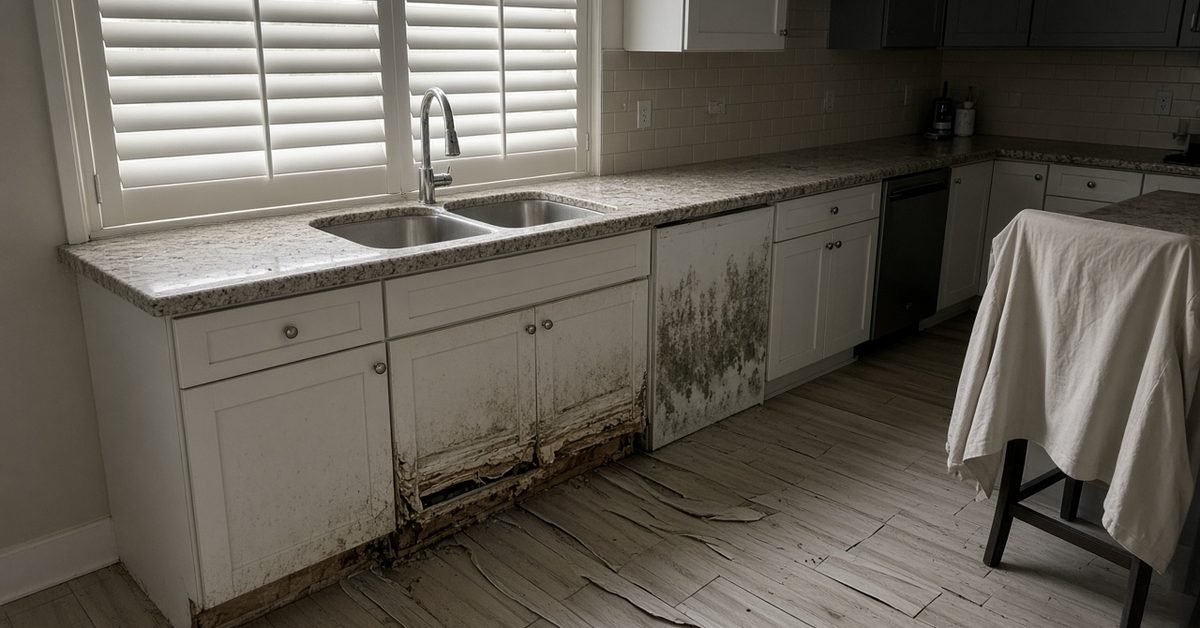
Thousands of homes along the Treasure Coast and in Palm Beach County sit empty for part of the year while their owners head north. It is one of the best parts of Florida life. It is also one of the riskiest situations for water damage, because a leak in an empty house has nobody around to notice it.
We get these calls most often in the fall, when owners come back or a neighbor spots water under the garage door. Here is why seasonal homes are vulnerable, how to protect yours, and what to do if you come home to water.
Why Empty Homes Are at Risk
In an occupied home, a small leak gets noticed. Someone sees a puddle, hears dripping, or notices the water bill. In an empty home, a supply line under a sink can drip for weeks. A toilet fill valve can fail and run. An AC condensate line can clog and overflow into the closet.
Many owners raise the thermostat or turn the AC off while they are gone to save money. That lets indoor humidity rise, which adds moisture to everything in the house, and it can make water damage from a small leak far worse by the time anyone finds it.
And of course, summer and fall are also storm season. A seasonal home can take on wind-driven rain through a damaged roof or window with nobody there to tarp it.
Steps Before You Leave
- Shut off the main water valve, or install an automatic shutoff valve you can control from your phone.
- Turn off the water heater, or set it to vacation mode.
- Keep the AC running at a reasonable setting, usually in the high 70s or low 80s, with humidity control if your system has it.
- Have the AC condensate line cleared before you go.
- Install water leak sensors near the water heater, washer, sinks, and air handler.
- Arrange for a trusted neighbor or home watch service to check the property regularly, especially after storms.
If You Come Home to Water
- Shut off the main water valve if it is still on.
- Turn off power to wet areas before walking through standing water.
- Take photos and video of everything before moving anything.
- Note what you find and when, since timing questions often come up in claims.
- Call your insurance company and a restoration company as soon as possible.
What Restoration Looks Like After a Long-Running Leak
A leak that ran for weeks is a different job than one caught in an hour. Water has had time to wick up walls, soak under cabinets, and spread through flooring. Wood cabinets may have swollen, and laminate floors may have lifted. The damage often extends into rooms that look fine at first glance.
Professional water damage restoration starts with a full inspection and moisture map of the house. Wet materials that can’t be saved come out, and the structure is dried with commercial equipment until readings are back to normal. Then repairs begin.
Protecting What’s Inside
Furniture, rugs, artwork, clothing, and paperwork in an empty home can be affected even if they never touched standing water, because humidity builds up while the house sits closed. Our personal property restoration team inventories and cleans affected belongings, and can pack out items so they aren’t in the way while the house is dried and repaired.
Managing the Job From Up North
Many of our seasonal clients aren’t in Florida when the damage is found. That’s fine. We can coordinate access with a neighbor or property manager, send photos and moisture readings, and keep you updated by phone and email throughout the job. We also document the damage for your insurance company so the claim can move while you’re away.
Frequently Asked Questions
Should I turn off the water when I leave my Florida home for the season?
For most seasonal owners, yes. Shutting off the main water valve is one of the simplest ways to prevent a long-running leak. If you need water on for irrigation or a pool, consider a smart shutoff valve and leak sensors you can monitor from your phone.
What temperature should I leave the AC at while I’m away?
Many owners keep the thermostat somewhere in the high 70s to low 80s, ideally with humidity control turned on. Turning the AC off completely can let indoor humidity climb, which is hard on furniture, cabinetry, and flooring. Ask your HVAC technician what works best for your system.
Will insurance cover a leak that ran while I was away?
It depends on your policy and how long the leak ran. Some policies limit coverage if a home is vacant for an extended period or if reasonable precautions weren’t taken. Regular home checks and records of maintenance help support your claim.
Can you handle everything while I’m up north?
Yes. We regularly work for owners who are out of state. We coordinate access with a neighbor or home watch service, send photos and moisture readings, communicate with your adjuster, and keep you updated until the home is ready for your return.
Here When You Need Us
We help seasonal owners across the region, including Port St. Lucie and West Palm Beach and Palm Beach Gardens. If water has been found in your Florida home, call Coastal Property Restoration at 877-853-5663. We’re available 24/7.