

The Gap Between Visual Inspection and Actual Hurricane Damage
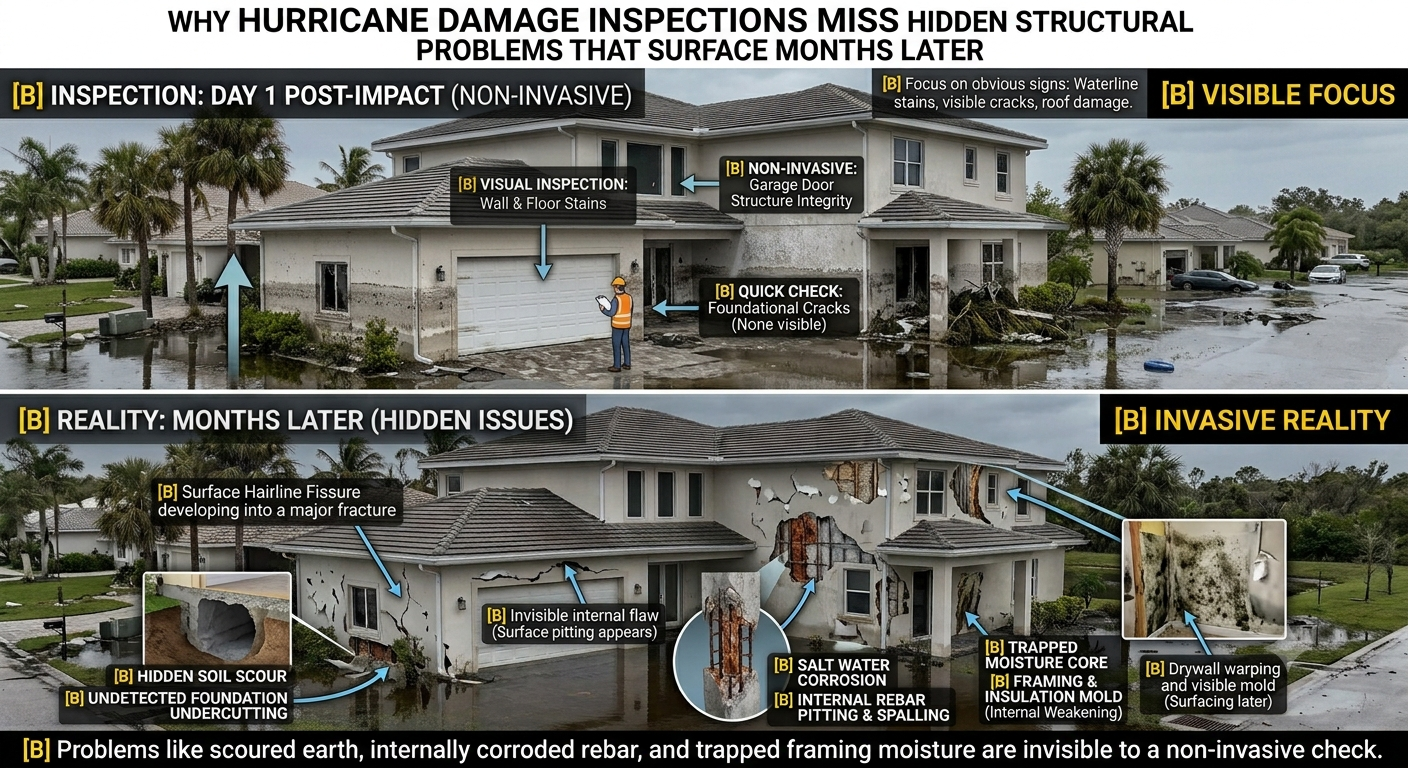
Standard hurricane damage inspections performed in the days following a storm event identify obvious damage: missing roofing, broken windows, visible structural failures, standing water. What they routinely miss is the hidden damage that doesn’t manifest until weeks or months later. Florida hurricane events subject structures to wind loads, pressure differentials, vibrational stress, and water intrusion that compromise building systems in ways that aren’t detectable through visual inspection. Hurricane-force winds create pressure cycling that fatigues structural connections even when they don’t fail catastrophically. Roof decks that visually appear intact may have experienced fastener pullout or sheathing delamination that reduces their structural rating from the original specification. Walls that show no cracking may have experienced mortar joint damage in concrete block construction that allows water infiltration in subsequent rains. Understanding what visual inspections can and cannot reveal is essential for Florida homeowners dealing with the aftermath of major storms.
Wind Uplift Damage to Roof Assemblies That Isn’t Visible
Modern Florida roofing assemblies are engineered to specific wind uplift ratings based on fastener patterns, adhesive coverage on underlayment, and sheathing attachment. Hurricane winds that approach or exceed design limits stress these assemblies to failure thresholds even when the roof survives intact. Roofing nails experiencing maximum pullout forces during the storm may have elongated their embedment holes, reducing future pullout resistance by 20-30%. Peel-and-stick underlayment installed over high temperatures may have had adhesion compromised by the vibrational stress of wind loading. Ice-and-water shield membrane laps that were factory-sealed may have lifted and resealed, leaving adhesion compromises at seam locations. None of these damage modes are visible from rooftop or attic inspection immediately following the storm. They manifest later when subsequent rain events penetrate through the compromised assembly, creating water intrusion where none occurred during the original hurricane because the storm moved quickly while later rains provide sustained exposure.
Concrete Block Wall Damage From Hurricane Pressure Differential
Florida’s dominant concrete block wall construction is strong in compression but relatively vulnerable to the out-of-plane bending stresses produced by hurricane wind pressure. When wind pressure exceeds design limits on block walls, mortar joints experience micro-cracking that compromises the watertight integrity of the wall assembly without producing visible exterior cracking. These micro-cracks in mortar joints allow wind-driven rain in subsequent storms to penetrate the block cavity, saturating interior wall framing and insulation. In concrete block construction with interior drywall furring, the water infiltration space between block and drywall allows moisture to accumulate invisibly. Homeowners experience interior mold growth, efflorescence on block surfaces, and musty odors months after the hurricane, with no obvious entry point. Post-hurricane pressure testing of block walls using calibrated spray rack equipment identifies compromised mortar joint locations that aren’t detectable visually. This testing is rarely performed in standard insurance inspections but is essential for comprehensive hurricane damage assessment in block construction.
HVAC System Structural and Contamination Damage
Rooftop HVAC equipment, ductwork, and air handler units experience hurricane damage that isn’t captured in standard building inspections. Rooftop package units subjected to hurricane winds experience compressor mounting stress, refrigerant line vibration damage, and control board exposure to water infiltration through compromised condenser cabinet seals. These damage modes often don’t cause immediate system failure but produce progressive deterioration over the following months. Ductwork in attic spaces experiences trauma from debris impact, insulation compression, and connection separation at duct boot locations during hurricane wind events. Separated duct connections allow unconditioned attic air, often at temperatures exceeding 140 degrees in Florida summer, to enter the conditioned air supply, dramatically reducing HVAC efficiency and increasing energy costs. Hurricane debris penetrating attic spaces through damaged roof sections can damage or compress ductwork in ways that aren’t detectable without attic inspection after the event. Comprehensive hurricane damage documentation for insurance purposes includes HVAC system assessment by qualified technicians, not just visual inspection of rooftop equipment from ground level.
Foundation and Slab Damage From Storm Surge and Flooding
Storm surge and flooding events produce hydrostatic pressure on Florida slab foundations and below-grade elements that can cause damage not immediately obvious during post-storm inspection. Saturated soils surrounding slab foundations lose bearing capacity temporarily during flood events, allowing minor differential settlement that produces hairline cracking in slab assemblies. These cracks are often not detectable during initial inspection when the slab may still be wet or covered with debris but become problematic when they allow moisture vapor transmission that affects floor coverings installed during restoration. Storm surge events with significant wave action can also compromise the bearing capacity of fill soils beneath slabs in coastal areas, creating long-term settlement risk that manifests as floor sloping and door misalignment months after the event. Foundation assessment following storm surge events should include soil bearing capacity evaluation, not just visual inspection of the slab surface, to identify settlement risk before rebuilding begins.
Comprehensive Post-Hurricane Assessment Protocol
Thorough hurricane damage assessment for Florida properties requires a multi-discipline approach that goes beyond the visual inspections typically performed for insurance purposes. Roof assemblies require fastener pullout testing and underlayment adhesion assessment in addition to visual inspection. Concrete block walls require pressure testing to identify compromised mortar joints. Structural connections require inspection against design documentation to identify fastener damage. HVAC systems require operational testing and refrigerant charge verification. Foundations in flooding areas require moisture monitoring and, where storm surge occurred, soil bearing assessment. Interior spaces require moisture mapping to identify hidden saturation in wall cavities, above ceiling assemblies, and beneath flooring. This comprehensive assessment typically takes longer and costs more than standard insurance inspections, but it identifies the full scope of hurricane damage before restoration begins, preventing the scenario where hidden damage surfaces after restoration is complete and creates disputed coverage claims.
Frequently Asked Questions
| How long after a hurricane can hidden damage appear? | Hidden hurricane damage can manifest weeks to months after the event. Compromised roofing assemblies may not leak until sustained rainfall in subsequent storms. Mortar joint damage in concrete block walls may not show interior water infiltration until the next rainy season. HVAC damage from vibration and debris may produce progressive failure over 3-6 months. Early comprehensive assessment prevents surprise damage after restoration is complete. |
| Why do insurance inspections often miss hurricane damage that appears later? | Standard insurance inspections are visual assessments performed quickly after the storm to identify obvious damage. They don’t include fastener pullout testing, wall pressure testing, soil bearing assessment, or HVAC operational evaluation. Hidden damage modes that require specialized testing aren’t captured. Comprehensive professional assessment using testing protocols beyond visual inspection identifies hidden damage while insurance claims are still open. |
| Should Florida homeowners hire a public adjuster or restoration company first after hurricane damage? | Contact a professional restoration company first to document and prevent further damage, as prompt action is typically required by insurance policies. A restoration company performs damage assessment and documentation that supports your claim. A public adjuster can then review that documentation and negotiate your claim. Both serve important but sequential roles in maximizing covered restoration scope. |
| What is the biggest hidden hurricane damage risk for Florida slab homes? | Slab moisture infiltration and differential settlement from soil saturation are the most commonly missed damage modes in slab construction. Hairline slab cracks from storm surge hydrostatic pressure allow moisture vapor transmission that causes flooring failure and mold growth beneath new floor coverings installed during restoration. Slab moisture assessment before flooring installation is essential to prevent this recurring problem. |